Autism and remote work in the UK: does it actually help?
For many autistic adults, working from home genuinely does reduce the sensory and social load of a working day. But it isn't automatically easier. Video calls carry their own sensory cost, isolation is a real and documented risk, and there are specific UK rights worth knowing before you ask for it.
What follows covers what remote and hybrid work actually change for autistic people, what they make harder, and the practical routes to get a setup that works for you, rather than whichever default your employer happens to offer.
Key Facts
- The Buckland Review of Autism Employment (GOV.UK, February 2024) found only around 3 in 10 autistic people of working age are in employment, against roughly 5 in 10 disabled people and 8 in 10 non-disabled people, and names flexibility including part-time home working as something that can reduce the stress behind this gap.
- Since 6 April 2024, every UK employee has a day-one right to request flexible working, including working from home, and can make up to two requests in any 12-month period.
- The right to request flexible working and the Equality Act 2010 duty to make reasonable adjustments are legally separate. If a request to work from home relates to your autism, both routes apply, and refusing a reasonable adjustment can still be discrimination even if your employer handled the flexible working process correctly.
- Access to Work explicitly covers home working. It can fund noise-cancelling headphones, screen filters, ergonomic equipment, assistive software and support workers for a home setup, and it never has to be repaid.
- Access to Work is badly backlogged right now: average processing time reached 109 working days in November 2025 against a 25-day target, and some applicants are being told to expect up to 37 weeks. Apply as early as you can.
- Poorly designed hybrid or remote arrangements carry a real isolation risk. The Equality and Human Rights Commission (September 2024) recommends employers build in deliberate, regular contact with home-based staff to avoid it.
Why remote and hybrid work appeals to many autistic adults
Home working sits alongside flexible hours, a fixed workstation, dimmer lighting and distance from strong smells or noise on the National Autistic Society's own list of things autistic employees can reasonably ask for. It's one useful option among several, not a single fix.
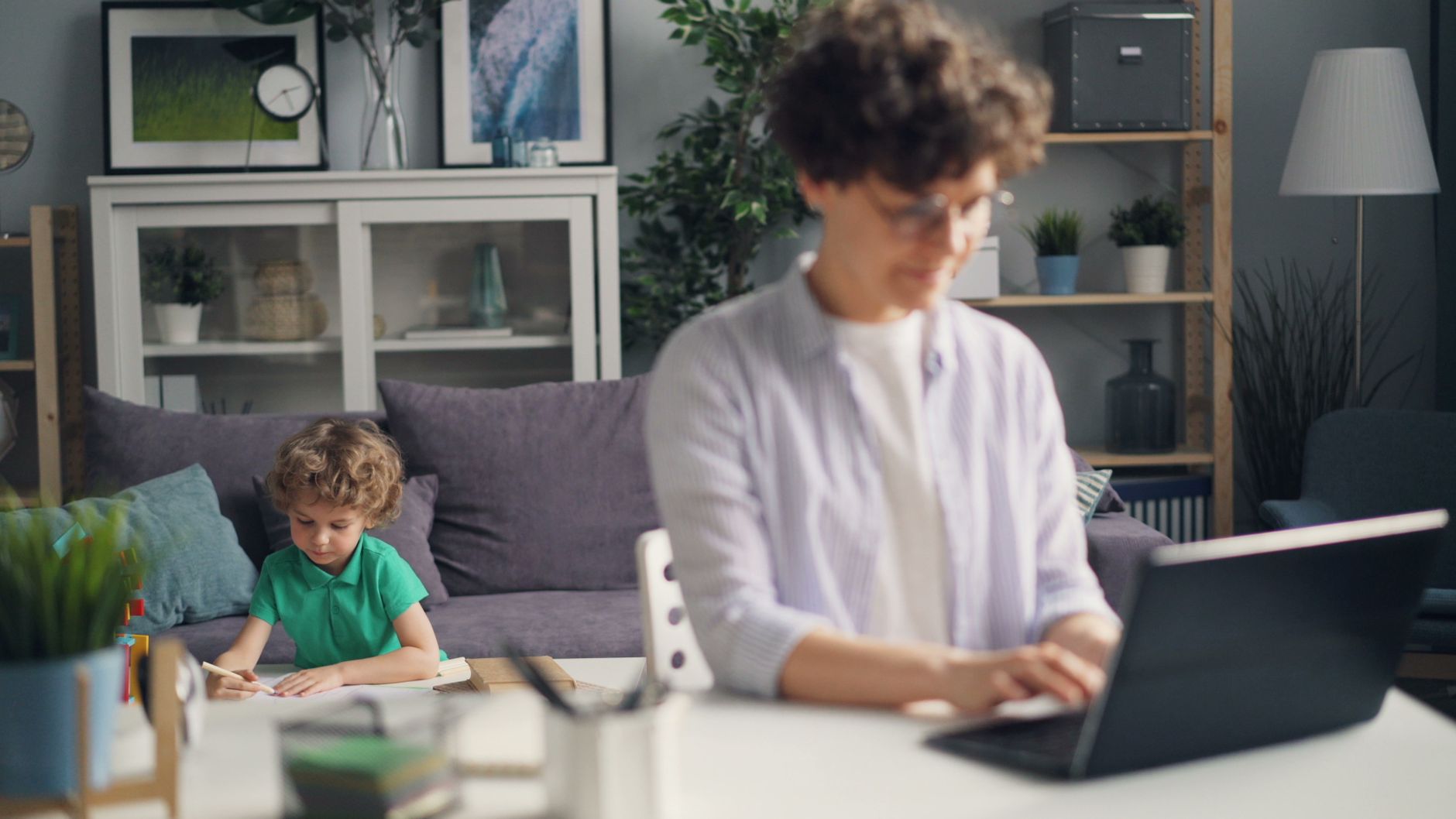
The Buckland Review frames it the same way. Flexibility over start and finish times, access to a quiet space for down time, and part-time home working are grouped together as ways to reduce the stress of commuting, open-plan noise and unpredictable office sensory input. Remove the commute and the office soundscape, and a lot of the background load of a working day genuinely goes away.
The catch: video calls aren't sensory-neutral
A default "remote equals easier" assumption misses that video calls bring their own sensory and cognitive load: screen glare, call lag and echo, a grid of competing faces, and the loss of most non-verbal cues that autistic communication styles often rely on more heavily than neurotypical norms assume. Qualitative accounts from autistic remote workers, including a small study facilitated by Autistic Nottingham, describe this as extra cognitive and emotional labour needed to make remote work accessible. It doesn't happen automatically.
Things worth asking for to reduce the load:
- Materials and agendas shared in advance, so calls aren't the first time you're processing new information
- Name-labelled captions turned on by default
- Permission to keep your camera off or contribute in chat instead of live speech
- Recovery time built in between back-to-back calls, rather than scheduling them wall to wall
Written communication cuts both ways
Asynchronous channels like email, docs and chat let you process at your own pace and keep a permanent record to refer back to. For people who find real-time verbal processing demanding, that's a genuine strength, and it's why the National Autistic Society recommends written follow-up to verbal instructions as a reasonable adjustment in general, not just for remote roles.
The flip side is real too: tone and ambiguity are harder to read in Slack or email than in person, especially if you rely on being able to ask for clarification in the moment. This is a commonly reported difficulty rather than something UK research has quantified precisely, so treat it as something to plan around, agree a "just ask" norm with your team, request a quick call instead of a long written back-and-forth when something feels ambiguous, rather than a fixed rule about how you'll cope.
Isolation is a real risk, not a reason to avoid remote work
UK academic research shows autistic adults, particularly in midlife and older age, report less social connectedness and more loneliness than non-autistic adults, and that loneliness is strongly linked to poorer mental health in both groups. That's evidence about baseline loneliness risk rather than a controlled study proving remote work specifically increases isolation, but it's a real enough pattern that the Equality and Human Rights Commission's September 2024 guidance for employers explicitly warns that poorly designed hybrid working "can also create difficulties like a lack of inclusion, isolation from colleagues," and recommends employers set out principles for regular contact with home-based staff.
If you go remote or hybrid, build deliberate social contact into your week rather than leaving it to chance. A standing video check-in that isn't purely task-focused, a coworking day with colleagues, or simply naming isolation as a risk to your manager early, before it becomes a problem, all make a difference.
Know which legal route you're using
There are two separate rights here, and which one applies changes what "no" from your employer actually means.
The day-one right to request flexible working (since 6 April 2024) is a process right. Your employer must consider your request and respond within two months, but they can refuse it for one of eight defined business reasons. For the full mechanics and a request template, see how to ask for flexible hours or remote work.
The Equality Act 2010 duty to make reasonable adjustments is a substantive right tied to disability. Autism counts, and you don't strictly need a formal diagnosis. If a request to work from home is actually about managing autism-related sensory or processing needs, this route applies alongside the flexible working process, and your employer can't simply decline it as inconvenient. See our full breakdown of reasonable adjustments at work in the UK for how to make that case.
Access to Work funds the setup, but apply early
Access to Work will fund a home office setup much as it would an office desk: noise-cancelling headphones, screen filters, ergonomic furniture, assistive software, even a support worker. Grants don't need to be repaid. Access to Work payments generally don't affect other benefits, but if you're receiving Universal Credit or other means-tested support, confirm the interaction with a benefits adviser or the DWP before applying. Full detail on what it covers and how to apply is in our guide to Access to Work explained.
The catch, as of late 2025, is the wait. Average processing time has reached 109 working days against a 25-day target, and some applicants are being told up to 37 weeks. Apply as soon as you accept a role, or as early as possible in your current job, rather than waiting until the lack of equipment is already causing problems.
Find a setup that fits you, not the other way around
The right setup is individual, not universal. Before assuming full remote is the answer, weigh your own sensory profile against your own social needs. Does an office's noise and lighting genuinely drain you, or does the structure help you? Do you thrive on the passive contact of being around people, or does it cost you more than it gives? Hybrid, with the office days chosen deliberately rather than fixed by policy, works well for a lot of autistic employees who want quiet focus time at home and structured social contact on set days.
Once you know what you want, use the right legal route to ask for it, and get your Access to Work application moving early.
If you're ready to look for a role built around this from the start, browse remote and flexible neurodivergent-friendly jobs or see roles specifically suited to autistic professionals.