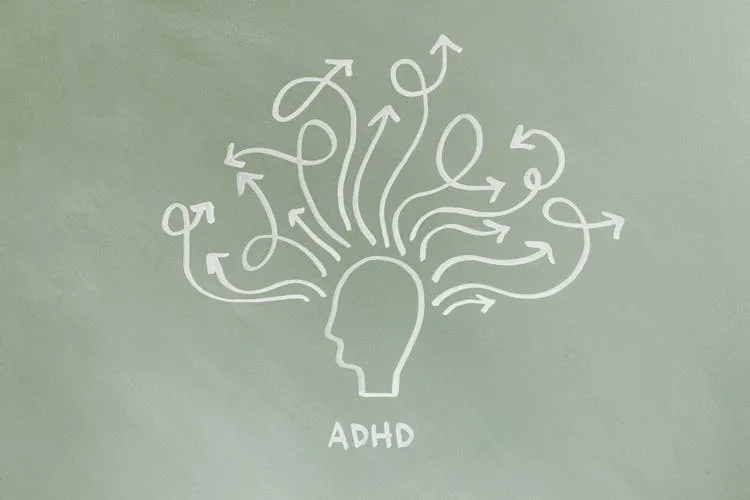
ADHD interview tips and preparation (UK): train for the room, not against your brain
Job interviews are designed around a set of assumptions: that you can reliably estimate how long an answer should be, that you can recall a specific example from three years ago under pressure, and that a neutral expression from an interviewer means nothing in particular.
For many adults with ADHD, none of those assumptions hold. That is not a character flaw. It is a predictable feature of how ADHD affects working memory, time perception, and emotional processing. And because it is predictable, it has specific fixes.
This guide is practical ADHD interview preparation (the training that actually fits an ADHD brain): what ADHD does in interviews so you can spot it happening, what adjustments you are legally entitled to request under UK law, and how to prepare in a way that works under pressure, not just on paper.
Key Facts
- ADHD is a disability under the Equality Act 2010, which means employers must make reasonable adjustments during recruitment, not just after you start work
- You are not legally required to disclose your ADHD at any point during a job application or interview. Disclosure is entirely voluntary
- Adjustments you can ask for include: interview questions in advance, extra processing time, a quiet room, permission to bring notes, and a remote interview option
- You do not need to name your diagnosis to request an adjustment, you can describe how your condition affects you without disclosing the label
- ACAS confirms that being neurodivergent "will often amount to a disability under the Equality Act 2010," and that employers should provide support "whether or not they have a diagnosis"
ADHD interview preparation that works like training
Think of interview prep as deliberate practice, not last-minute cramming. ADHD brains often need external structure, written prompts, and repetition more than long passive reading.
A simple training loop:
- Write five to seven work examples (situation, what you did, result).
- Say them out loud once a day for a few days, timed to two to three minutes.
- Simulate pressure: set a timer, have a friend ask a random question from your bank.
- Request adjustments early when you get the invite (questions in advance, extra time, notes allowed).
- Plan the recovery after the interview so rejection sensitivity does not decide your next move for you.
The sections below unpack time blindness, working memory, and rejection sensitivity in the room, then the legal adjustments and day-of tactics.
The three ways ADHD makes interviews harder
Understanding the mechanism helps you prepare for it.
1. Time blindness
ADHD affects your ability to perceive how much time is passing. In an interview this shows up as answers that run for eight minutes when two were expected, or thirty-second answers when a fuller response was needed. It also affects arrival: misjudging travel time, or arriving so early that you spend an hour in reception getting progressively more anxious.
2. Working memory gaps
You prepared the perfect example. In the room, it has completely gone. This is not nerves and it is not lack of preparation, it is working memory, which ADHD affects directly. The high-pressure environment of an interview depletes the very resource you are depending on to retrieve answers.
3. Rejection sensitivity
Many adults with ADHD experience rejection sensitive dysphoria (RSD): an intense, immediate emotional response to perceived rejection or criticism. In an interview context, this means hypervigilance to every facial expression, catastrophising a perfectly ordinary pause, and a significant emotional crash after a "no" that goes well beyond standard disappointment.
What adjustments you can ask for
Under the Equality Act 2010, employers must make reasonable adjustments during recruitment for candidates with a disability. ADHD qualifies as a disability when it has a substantial, long-term effect on day-to-day activities.
Adjustments that are specifically useful for ADHD include:
- Interview questions in advance: even just the themes or competency areas reduces working-memory pressure significantly. Many employers will share these; most will at least confirm the format
- Extra processing time: 50% additional time is a commonly used benchmark. You can also simply ask for "a moment to think before answering" during the interview itself
- A quiet room: away from open-plan noise, corridors, and glass walls. For in-person interviews, this is a reasonable and easy request
- Permission to bring and use notes: a notepad with bullet points of key examples. Most interviewers will not penalise this, particularly when an adjustment is in place
- A remote interview option: eliminates commute unpredictability and gives you control over your environment
- Flexible scheduling: avoiding early-morning slots if that is when your medication or energy levels are hardest to manage
You do not need to name your diagnosis to ask for any of these. You can say: "I have a condition that affects my concentration in time-pressured situations. Would it be possible to receive the interview questions in advance, or to have a few extra minutes to gather my thoughts between answers?"
If you disclose ADHD and an employer refuses a reasonable adjustment without good reason, that is likely unlawful discrimination under the Equality Act.
When to raise adjustments
Request adjustments when you receive the interview invitation, not on the day. Most organisations handle this through HR or a coordinator, so raising it early gives them time to arrange what you need.
If you are unsure whether to disclose during the application process, a practical middle path is to request adjustments without naming your diagnosis, and to discuss it fully if you receive an offer. This reduces the risk of unconscious bias during selection while still getting you the support you need in the room.
Preparing for the interview itself
Build your example bank in writing
Before the interview, write down five to seven specific examples from your work history. For each one, note the situation, what you did, and what the result was. Keep this on a notepad you bring into the room.
Writing rather than rehearsing externalises your working memory. When you blank in the room, you have a physical reference to return to.
Use STAR as a shape cue, not a script
Situation, Task, Action, Result. You do not need to script every word, but knowing the shape of an answer helps your brain retrieve the content. Practice saying your examples out loud, aim for two to three minutes per answer, timed.
Time your travel, then add a buffer
Set two alarms: one for when you need to leave, one as a backup. Arrive in the vicinity ten to fifteen minutes early and settle in a nearby coffee shop, not the reception. Arriving at the building very early and waiting tends to increase anxiety rather than reduce it.
In the room
Keep a watch or clock in view. Use a recovery phrase when you blank: "Let me just gather my thoughts for a second" is professional and buys you ten seconds. Most interviewers will not notice a brief pause; your brain will make it feel much longer than it is.
Handling rejection sensitivity afterwards
Decide before you walk in what you will do in the first hour after a rejection. Go for a walk. Call a specific person. Watch something easy. Have a plan that is already made, so if the email comes, you are not making decisions in a moment of acute distress.
Ask for feedback in writing even when you do not expect a detailed reply. It keeps you in a learning mindset and occasionally yields genuinely useful information.
And remind yourself: interviewing is a skill that improves with repetition. One outcome is not a verdict on your ability to do the job.
Related reading
- Job interviews when you're neurodivergent: the pillar guide covering the full picture of interview prep
- Managing interview anxiety as a neurodivergent person: techniques for nerves before and during the interview
- Should you disclose neurodivergence in a job application?: how to think through the timing and the decision
- ADHD at work: a complete UK guide: a deeper look at ADHD in the workplace once you land the role