Glossary: neurodivergent terms explained
If you've recently been diagnosed, or have just started researching neurodivergence and work, you've probably run into a lot of unfamiliar terms. Some come from psychology. Some from UK employment law. Some are community shorthand that never made it into any official document.
This glossary explains them all in plain English. It's a living page - we'll add terms as they come up across the site. If there's a word or phrase you keep seeing that isn't here, let us know.
A
Access to Work A UK government grant scheme run by the Department for Work and Pensions (DWP). It provides funding for workplace support that goes beyond what an employer is legally required to provide as a reasonable adjustment. This can include specialist coaching, assistive technology, a support worker, or travel costs. It is massively underused - most people who are eligible have never heard of it. You apply directly to DWP; your employer does not have to know you're applying, though many people involve HR once the grant is agreed. See our full guide: Access to Work Explained.
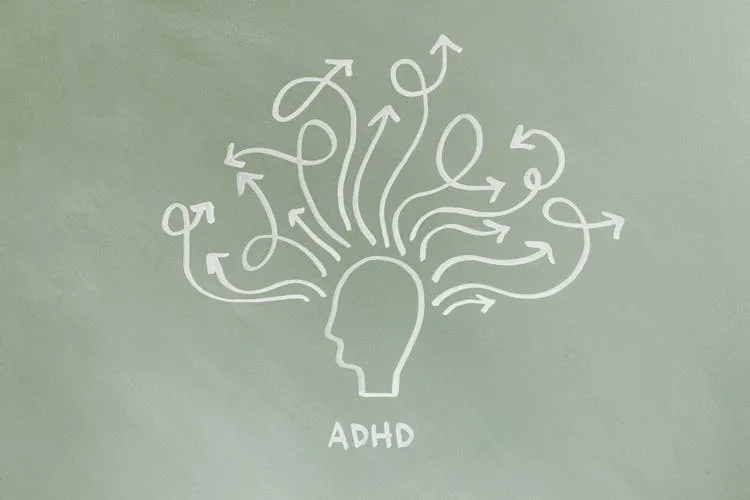
ADHD (Attention Deficit Hyperactivity Disorder) A neurodevelopmental condition affecting attention regulation, impulse control, and executive function. The name is slightly misleading - it's not a deficit of attention so much as an inconsistency in directing it. People with ADHD can experience hyperfocus on things that interest them while struggling to engage with tasks that don't. There are three presentations: predominantly inattentive, predominantly hyperactive-impulsive, and combined. ADHD is covered as a disability under the Equality Act 2010 when it has a substantial, long-term effect on day-to-day activities.
ASD (Autism Spectrum Disorder) A clinical term for autism. Many autistic people prefer to say "autistic" rather than "person with ASD" or "person with autism" - identity-first language is the preference of most autistic adults in the UK, though preferences vary. See Autism below.
Autism / Autistic A neurodevelopmental condition characterised by differences in social communication, sensory processing, and patterns of thinking and behaviour. Autism is not a single profile - it presents differently in every person. The word "spectrum" is often misunderstood to mean a simple scale from mild to severe; in reality, it refers to a wide range of traits that vary between individuals and across contexts. In the UK, autistic people have legal protections under the Equality Act 2010. Approximately 78% of autistic adults in the UK are not in full-time employment - a statistic often cited as the highest unemployment rate of any disability group (National Autistic Society, 2016).
Autistic Burnout A state of long-term exhaustion - physical, cognitive, and emotional - caused by sustained masking, sensory overload, or chronic stress. It is distinct from general burnout or depression, though it can look similar from the outside. Recovery typically requires significant reduction in demands and social obligations. It is not the same as "having a bad week" - it can last months or longer. Autistic burnout is increasingly recognised in clinical literature but is not yet a formal diagnostic term.
C
Camouflaging See Masking.
Co-occurring conditions Many neurodivergent people have more than one diagnosis - for example, ADHD and dyslexia, or autism and ADHD (sometimes called AuDHD). This is the norm rather than the exception. Content that assumes someone has only one condition often misses how traits and challenges interact in practice.
D
DCD (Developmental Coordination Disorder) The clinical name for dyspraxia. A condition affecting motor coordination and processing of sensory information. It can make tasks like typing, handwriting, using tools, or navigating busy environments more difficult. DCD affects planning and sequencing too, which can overlap with executive function difficulties seen in ADHD.
Diagnosis A formal assessment by a qualified professional (psychiatrist, psychologist, or specialist nurse, depending on the condition). In the UK, ADHD and autism assessments through the NHS currently have waiting times of several years in most areas. Private assessment is available but costs £1,000–£2,500+ depending on the condition. Some people self-identify as neurodivergent without a formal diagnosis; for the purposes of the Equality Act 2010, a formal diagnosis is not required - what matters is whether the condition has a substantial, long-term effect on day-to-day activities.
Disability Confident A voluntary UK government scheme for employers. Employers sign up to a tiered commitment (Committed, Employer, Leader) and receive a badge to display in job adverts. Signing up does not guarantee an inclusive workplace - the scheme has been criticised for being largely self-assessed. A Disability Confident badge is a weak signal; interview processes and actual adjustment policies tell you more about whether an employer is genuinely inclusive.
Disclosure Telling an employer (or potential employer) about your neurodivergent condition or disability. There is no legal requirement to disclose. However, an employer has a legal duty to make reasonable adjustments only once they know (or could reasonably be expected to know) that you are disabled. The timing, method, and content of disclosure is a strategic decision - and the right answer varies significantly depending on the employer, the role, and what you need. See our guide: How to Disclose Neurodivergence in Job Applications.
DSA (Disabled Students' Allowance) UK government funding for disabled students in higher or further education. Separate from Access to Work (which covers employment). Worth knowing if you're in education alongside work, or if you're a student reading this.
Dyslexia A specific learning difference primarily affecting reading, writing, and spelling. Often involves difficulty with phonological processing (linking sounds to letters), working memory, and processing speed. Dyslexia does not reflect intelligence. Many dyslexic people develop strong verbal reasoning, creative problem-solving, and big-picture thinking as compensatory strengths. Dyslexia is covered by the Equality Act 2010 when it has a substantial, long-term impact on daily activities.
Dyspraxia A common term for DCD (Developmental Coordination Disorder). See DCD above.
E
Equality Act 2010 The primary piece of UK legislation protecting disabled people from discrimination in employment. Under the Act, neurodivergent conditions (ADHD, autism, dyslexia, dyspraxia, and others) qualify as disabilities when they have a "substantial" and "long-term" adverse effect on a person's ability to carry out normal day-to-day activities. The Act places a legal duty on employers to make reasonable adjustments. It also covers discrimination by association and perceived discrimination. You do not need a formal diagnosis to be protected - the test is functional, not diagnostic. See our guide: Reasonable Adjustments for Neurodivergent Employees.
Executive Function A set of mental processes that control and regulate other cognitive processes. Includes working memory, cognitive flexibility, inhibition, planning, organisation, and task initiation. Difficulties with executive function are common in ADHD and autism and are often the reason tasks that seem simple to others (starting a piece of work, switching between tasks, managing a to-do list) can be disproportionately difficult. Executive function is not about intelligence or effort.
H
Hyperfocus A state of intense, sustained concentration on a specific task or topic - most commonly associated with ADHD but also described by autistic people. During hyperfocus, it can be difficult to stop, switch tasks, or notice the passage of time. It is not the same as "being able to concentrate when you want to" - it tends to be driven by interest, novelty, challenge, or urgency, and is not reliably under voluntary control. It can be a significant strength in the right role, and a source of friction when hyperfocus is not on the right thing.
I
Identity-first language vs person-first language Identity-first language: "autistic person", "disabled person". Person-first language: "person with autism", "person with a disability". Surveys of autistic adults in the UK consistently show a preference for identity-first language. ADHD communities are more mixed. Dyslexia communities tend towards person-first. When writing about or for someone, take your cue from how they describe themselves.
L
Late diagnosis Being diagnosed with a neurodivergent condition in adulthood, after spending years (sometimes decades) without an explanation for the difficulties you've experienced. Late diagnosis is extremely common - particularly for women, people of colour, and those who masked effectively. A late diagnosis often comes with a mix of relief (an explanation), grief (for time lost or struggles that could have been supported earlier), and a process of re-evaluating past experiences through a new lens.
M
Masking / Camouflaging Consciously or unconsciously hiding or suppressing neurodivergent traits in order to appear neurotypical. This can include mimicking social behaviour, suppressing stims, rehearsing conversations in advance, or performing sustained eye contact. Masking is cognitively and emotionally exhausting. It is strongly associated with autistic burnout and increased mental health difficulties over time. Many people who masked throughout childhood receive a late diagnosis precisely because their masking made their differences less visible.
N
Neurodivergent An umbrella term for people whose brains work differently from what is considered neurotypical. This includes people with ADHD, autism, dyslexia, dyspraxia, Tourette syndrome, and other conditions. It is not a clinical term - it was coined in the neurodiversity movement and is widely used as a community and identity term. Not everyone with these conditions uses or identifies with the term.
Neurodiversity The concept that natural variation in human brain function is normal and has value. Originally coined by sociologist Judy Singer in the late 1990s. Neurodiversity as a framework argues that differences in cognition are not deficits to be fixed, but variations to be understood and accommodated. In an employment context, it has been adopted by many organisations as a framing for inclusion programmes - with varying degrees of meaningful change behind the terminology.
Neurotypical A person whose neurological development and functioning is consistent with what is considered standard. Used as a shorthand in neurodivergent communities to distinguish between ND and non-ND experiences - not as a pejorative, but as a descriptor.
R
Reasonable Adjustments Changes that employers in the UK are legally required to make to remove or reduce a substantial disadvantage that a disabled person faces compared to a non-disabled person. The Equality Act 2010 sets this out. "Reasonable" is not defined in the law - it depends on factors including the size of the employer, the cost, and whether the adjustment would be effective. Examples for neurodivergent employees include flexible working hours, written instructions rather than verbal, quiet workspace, extra time on tasks, or assistive software. Employers are required to discuss adjustments with you - they cannot decide unilaterally what is "reasonable" without considering what you actually need. See our full guide: Reasonable Adjustments for Neurodivergent Employees.
RSD (Rejection Sensitive Dysphoria) Intense emotional pain triggered by actual or perceived rejection, criticism, or failure. Strongly associated with ADHD, though not unique to it. The "dysphoria" (a state of profound unease) can be sudden, severe, and feels disproportionate to the trigger - which can be confusing and distressing both for the person experiencing it and those around them. RSD is not a formal DSM-5 diagnosis but is widely recognised in the ADHD community and increasingly in clinical literature. It can significantly affect job searching - rejection at interview can feel catastrophic in a way that is not easily shaken off.
S
Sensory overload A state reached when sensory input (noise, light, smell, touch, visual complexity) exceeds what the nervous system can comfortably process. It can cause difficulty concentrating, irritability, physical discomfort, or the need to withdraw entirely. Sensory overload is common in autism but also affects people with ADHD, dyspraxia, and anxiety. Environments that seem perfectly normal to most colleagues - open-plan offices, fluorescent lighting, busy communal areas - can be genuinely exhausting for someone with sensory differences.
Sensory processing differences Variation in how sensory information is registered, interpreted, and responded to. This can mean being hypersensitive (over-responsive - loud sounds, bright lights, textures, or smells feel more intense than for most people) or hyposensitive (under-responsive - seeking additional input, not noticing pain or temperature, needing more stimulation to feel alert). Many people experience a combination of both across different senses.
Spiky profile An informal term describing the uneven pattern of strengths and difficulties common in neurodivergent people. Where neurotypical cognitive profiles tend to be relatively even across domains, neurodivergent profiles often show significant peaks (exceptional ability in some areas) and troughs (significant difficulty in others). A person might have extraordinary long-term memory and poor working memory, or sophisticated verbal ability and severe difficulty with organisation. Traditional workplaces often focus on the troughs; the goal of good neurodivergent employment is to build roles around the peaks.
Stimming (self-stimulatory behaviour) Repetitive movements or sounds used to regulate sensory input, emotions, or focus. Examples include rocking, hand-flapping, tapping, fidgeting, pacing, or repeating sounds or words. Stimming serves a regulatory function - it is not just a habit or a "tic". It can be a sign of excitement, concentration, stress, or simply a neutral state. Suppressing stims (which masking often involves) is effortful and is associated with increased anxiety and autistic burnout.
T
Time blindness A commonly used term in the ADHD community for difficulty perceiving, estimating, and managing time. This is not laziness or disorganisation - it is a functional difference in how time is experienced. Many people with ADHD describe experiencing time as "now" and "not now", rather than as a linear progression. This can result in difficulty estimating how long tasks will take, arriving late despite intending not to, or losing track of time during absorbing tasks. Time blindness is one of the most commonly cited reasons that standard 9–5 office structures are problematic for people with ADHD.
W
Working memory The ability to hold and manipulate information in mind over a short period. Difficulty with working memory is common in ADHD, dyslexia, and dyspraxia. It can make following multi-step verbal instructions, remembering what you were about to do, or keeping track of a complex task more difficult. Working memory difficulties are not memory loss - information often is retained, but the mechanism for holding it in immediate awareness while using it is less reliable.
This glossary is updated as new articles are published. If you're looking for a specific term that isn't here, check back - or browse our full resource library.