Executive function at work: planning and starting when your brain resists
What executive function actually is
Executive function is the brain's management system. It is the collection of mental processes that let you plan, organise, start, and finish tasks - and handle the unexpected when things don't go to plan.
It covers six core areas: planning and prioritisation, task initiation, working memory, cognitive flexibility (switching between tasks), impulse control, and emotional regulation.
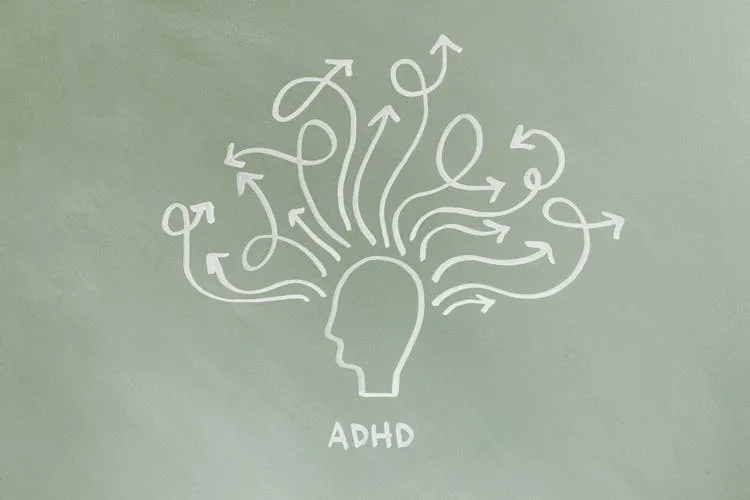
ADHD is, at its core, an executive function disorder. The difficulties with starting tasks, holding plans in your head, managing time, and regulating focus are all rooted in how executive function works differently in an ADHD brain. Autism, dyspraxia, and dyslexia also frequently involve executive function differences - not in the same way, and not for everyone, but enough that many neurodivergent people share overlapping experiences at work even when their diagnoses are different.
Planning and prioritisation - when everything feels equally urgent
One of the most common experiences for people with executive function differences is that everything feels like it needs doing right now. Your brain doesn't naturally generate a hierarchy. You open your inbox and every email feels equally important. You look at your to-do list and freeze.
The fix is not to try harder to prioritise in your head. The fix is to externalise the prioritisation process entirely.
Write it down and rank it. Don't try to hold priorities in working memory - they will shift and blur. Get everything out of your head and onto paper or a screen, then physically order it.
Weekly planning sessions. Set aside 15 to 20 minutes at the start of each week to decide your top three tasks. Three. Not ten. If those three things get done, the week was a success. Everything else is a bonus.
Ask your manager directly. Instead of guessing what matters most, ask: "What is the single most important thing for me to have done by Friday?" Most managers appreciate the question and it removes the mental load of interpreting competing signals.
For more on managing time with ADHD, including strategies for time blindness and body doubling, that article goes deeper on the tools.
Task initiation - "I know what I need to do and I still can't start"
The inability to start a task you fully intend to do is not laziness. It is not a character flaw. It is a neurological experience with a name - the initiation gap - and it is one of the most commonly reported difficulties among people with ADHD.
The initiation gap happens because starting a task requires a particular kind of activation energy that doesn't fire reliably in some brains. You can know exactly what needs doing, want to do it, have no other distractions, and still sit there unable to begin.
Here are three tools that genuinely help many people:
The two-minute rule. Commit to doing just two minutes of the task. Tell yourself you are allowed to stop after two minutes. The goal is to get through the initiation barrier - once you are moving, stopping is usually harder than continuing.
Write the next physical action, not the project. "Write the report" is not an actionable task. "Open the document" is a task. "Read back the last paragraph I wrote" is a task. Make the next step so small and concrete that there is no ambiguity about what you are physically doing first.
Use a timer as a permission slip. Set a timer for 20 or 25 minutes. The timer isn't just telling you to start - it is telling you that you are allowed to stop. Knowing there is an endpoint makes starting feel less like committing to an unknown stretch of effort.
Working memory - when your brain drops things mid-task
Working memory is your mental scratchpad - the temporary storage where you hold information while you are using it. For many neurodivergent people, this scratchpad is smaller, leakier, or less reliable than average.
In practice: someone tells you something in a meeting and you have forgotten it by the time you get back to your desk. You walk to another room for a reason and cannot remember what it was. You were mid-task, got interrupted, and now you cannot find your thread again.
The answer is to externalise everything:
- Write notes during meetings, not after. The act of writing reinforces retention and gives you something to return to.
- Use voice memos on your phone when writing is not practical.
- Keep a running capture list throughout the day. Every time something occurs to you - a task, a question, something you need to remember - it goes on the list immediately.
If this is a persistent problem at work, it is reasonable to ask for written follow-ups after verbal instructions or meetings. This is a recognised reasonable adjustment under the Equality Act 2010, not a special favour.
Task switching - when changing context has a real cost
For many neurodivergent people, switching tasks is cognitively expensive in a way that is hard to explain to someone who does not experience it. The transition itself takes effort - you have to download your new context, locate where you are, re-engage with different material. In an open-plan office or a job that demands constant context-switching, this cost compounds quickly.
Batch similar tasks together. Group all your email time into one or two blocks. Same with calls, writing work, or administrative tasks. Minimise the number of transitions, not the number of tasks.
Build in transition time. Don't schedule back-to-back tasks if you can avoid it. A five to ten minute gap between different types of work gives your brain time to close one context and open another.
Use startup and shutdown rituals. A brief morning ritual - reviewing your top three tasks, noting where you left off - orients you before anything else competes for attention. A shutdown ritual - logging what got done, noting where you stopped, setting tomorrow's first action - means you don't have to reconstruct your day from scratch each morning.
When your tools stop working
Executive function strategies have a shelf life. The novelty of a new system does some of the work. Over time, the novelty fades and the system becomes familiar. The tool stops working - and this can feel like failure.
It is not. Give yourself permission to cycle through approaches. Keep a note of what you have tried so you don't keep going back to things that stopped working.
Reasonable adjustments that can help
Many of these strategies can be formalised as reasonable adjustments with your employer under the Equality Act 2010: written instructions instead of verbal-only briefings, structured task handovers, regular check-ins to review priorities, and quiet or low-distraction workspace access. Our article on reasonable adjustments you can ask for covers what counts, how to ask, and what happens if your employer refuses.